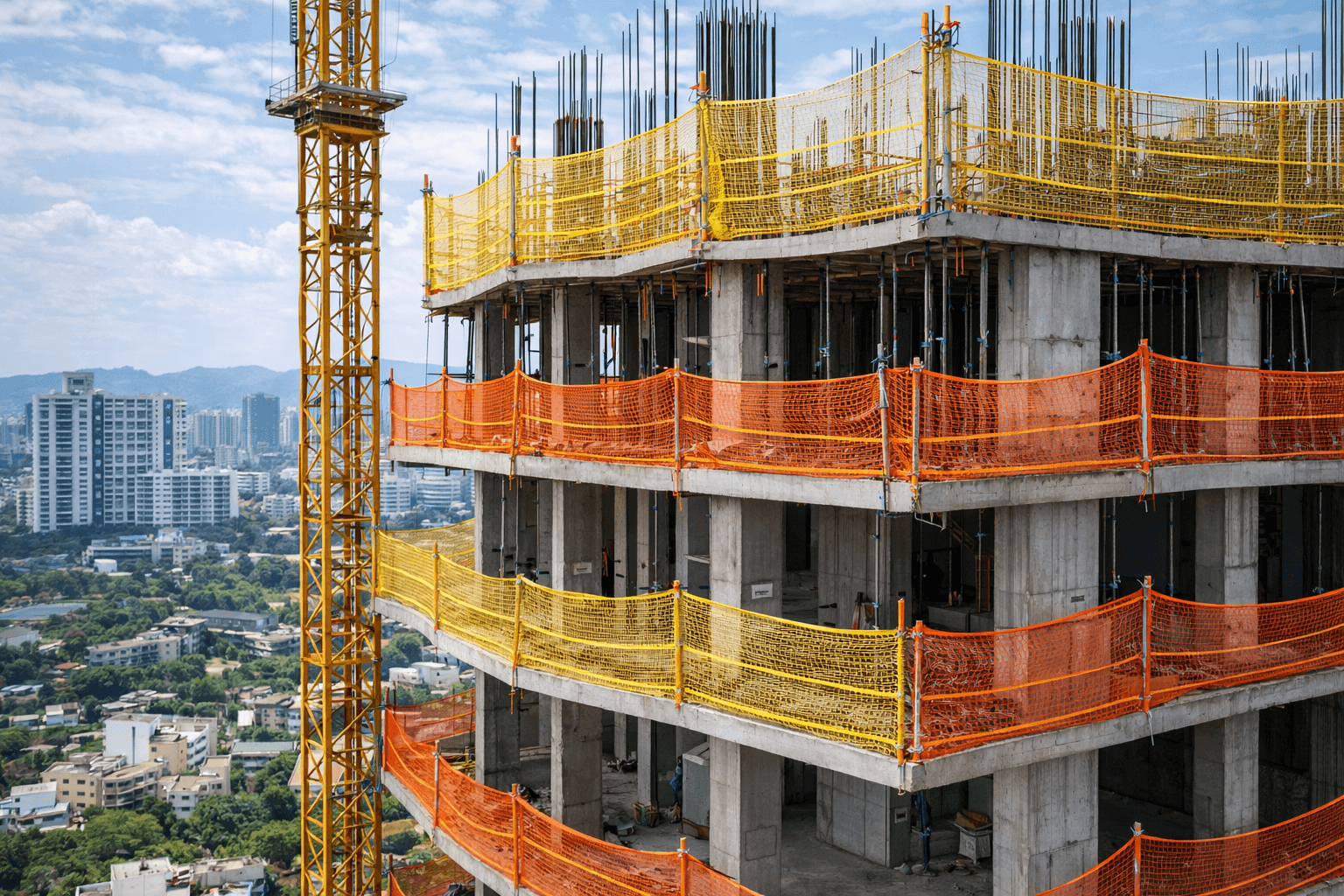
How to Choose the Right Safety Net: Single, Double, or Triple Layer for Your Pune Project
11 Jan 2026
Making Construction Sites Safer with the Right Safety Net
Every construction project is different. A low-rise building has different safety needs compared to a 25-storey tower or an infrastructure project. One of the most critical safety decisions project managers must make is selecting the right type of construction safety net.
Using an incorrect net can lead to accidents, failed inspections, and legal issues. Choosing the correct one, however, ensures worker safety, public protection, and uninterrupted project timelines.
At National Enterprises, we supply IS 14929 and EN 1263 certified safety nets and have installed them across Pune projects for developers such as Vikram Developers & Promoters, VIRAJ PROJECTS, Kunal Aspiree, and MIHIR HOMES REALTY.
Understanding Safety Net Types
Single-Layer Safety Nets – Basic Protection
Description:
Manufactured using braided HDPE twine (typically 2.5 mm), UV-stabilized for outdoor use.
Best Suited For:
Low-rise buildings
General debris containment
Warehouses and small construction sites
Advantages:
Cost-effective
Lightweight and easy to install
Limitations:
Not recommended for high-rise or heavy fall-risk areas.
Double-Layer Safety Nets – Enhanced Safety
Description:
A combination of braided safety net with a monofilament or secondary protective layer.
Best Suited For:
Mid-rise buildings (10–20 floors)
Areas involving welding, grinding, or cutting
Advantages:
Better impact absorption
Increased durability
Improved resistance to sparks and debris
Triple-Layer Safety Nets – Maximum Protection
Description:
A 3-in-1 system consisting of braided mesh, knotted overlay, and monofilament UV-stabilized net.
Best Suited For:
High-rise construction (20+ floors)
Bridges, metro, and infrastructure projects
High-risk fall zones
Advantages:
Superior fall protection
Excellent debris containment
Long service life
Full compliance with EN 1263 standards
Key Factors to Consider When Choosing a Safety Net
Project Height: Taller structures require multi-layer protection
Type of Work: Welding and cutting areas need spark-resistant nets
Surroundings: Urban sites require strong debris containment
Budget vs Safety: Lower cost should never compromise protection
A professional site assessment helps determine the safest and most cost-effective option.
Pune Project Highlights
Vikram Developers & Promoters (Midori Tower):
Triple-layer safety nets installed on 25+ floor residential towers with zero fall incidents.VIRAJ PROJECTS (Mamurdi):
Double-layer nets used for mid-rise residential and commercial developments.Kunal Aspiree:
Single and double-layer nets deployed for low to mid-rise projects.MIHIR HOMES REALTY:
Multi-layer safety nets installed for high-rise construction with full compliance.
Result: Zero major incidents, improved worker confidence, and successful safety audits.
Conclusion: The Right Net Can Save Lives
Choosing the correct safety net is not just a technical decision—it’s a life-saving one. Single, double, or triple-layer nets each serve a purpose when selected correctly and installed professionally.
At National Enterprises, we assess your site, recommend the right safety net, and provide professional installation across Pune, ensuring complete safety and regulatory compliance.
Not sure which net your project needs?
👉 Request a Free Safety Consultation